What they do and how
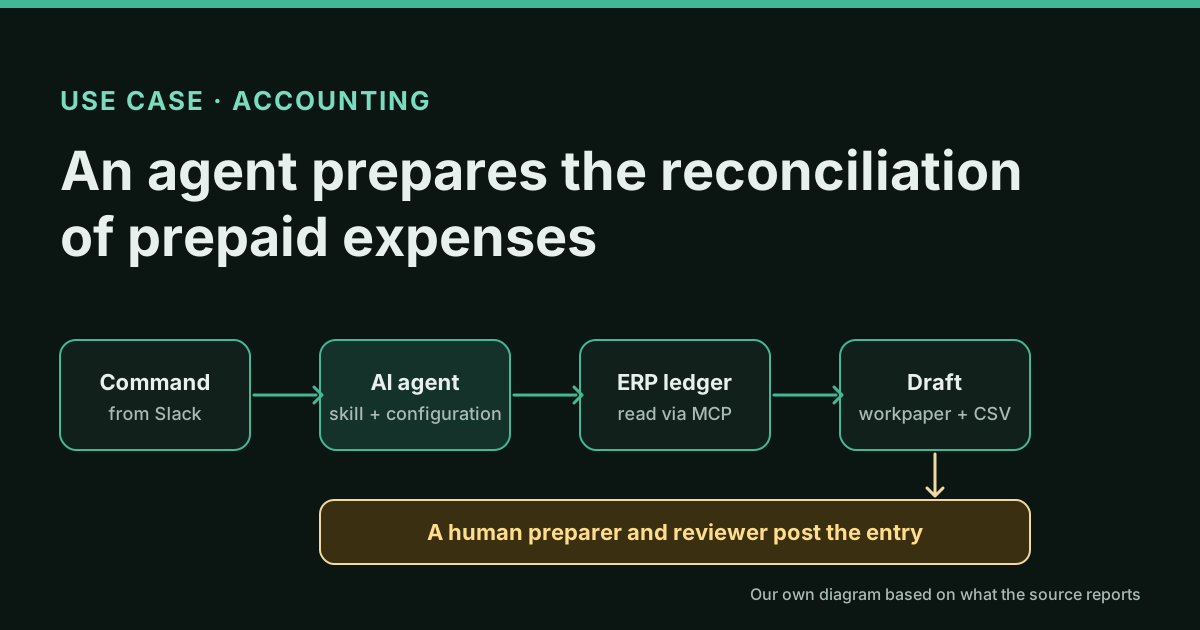
An agent prepares the monthly prepaid expense reconciliation. When it receives the command from Slack, it queries the ERP general ledger directly through MCP, finds the previous month’s workpaper, copies it to the current close folder and updates it with the new items and the amortization month, keeping the Excel formulas. When it finishes, it posts a summary in Slack with the workpaper, a CSV with the proposed journal entry and a mention of the preparer. The agent does not post the entry: there is still a human preparer and a reviewer.
Reported result
Stated by the author: from about 2 hours of human work to about 5 minutes, with more than 90% of the steps done by the agent, and the same pattern applied to other processes “took a full day” off the monthly close. The first run took more time, and afterwards the team kept refining the skill and the configuration. The article gives no per-process figures.
Stated figures. An identified person or organization states that they have used it. The results are stated by the source; we have not audited them.
What has really been tested
According to the author, their team uses it in production. They do not publish the contents of the skill or the configuration, do not identify the ERP and do not measure the savings of the other processes. We have not reproduced the flow. A reader commented on the risk of prompt injection: the agent reads external text (supplier names, invoice descriptions), has access to sensitive data and can write to systems; human review comes after the agent has already acted.
How to replicate it
Pick a repetitive reconciliation with a monthly workpaper. Split what the author describes into two pieces: a skill (the procedure, which hardly changes) and a configuration file (ledger accounts, supplier-to-account map, materiality threshold, partial-month convention, who to notify). Connect the agent to the ERP and the workpaper folder in read mode at first, and let it prepare the draft without posting. Keep a human preparer and reviewer, and adjust the skill every time you correct something that repeats.
The flow, step by step
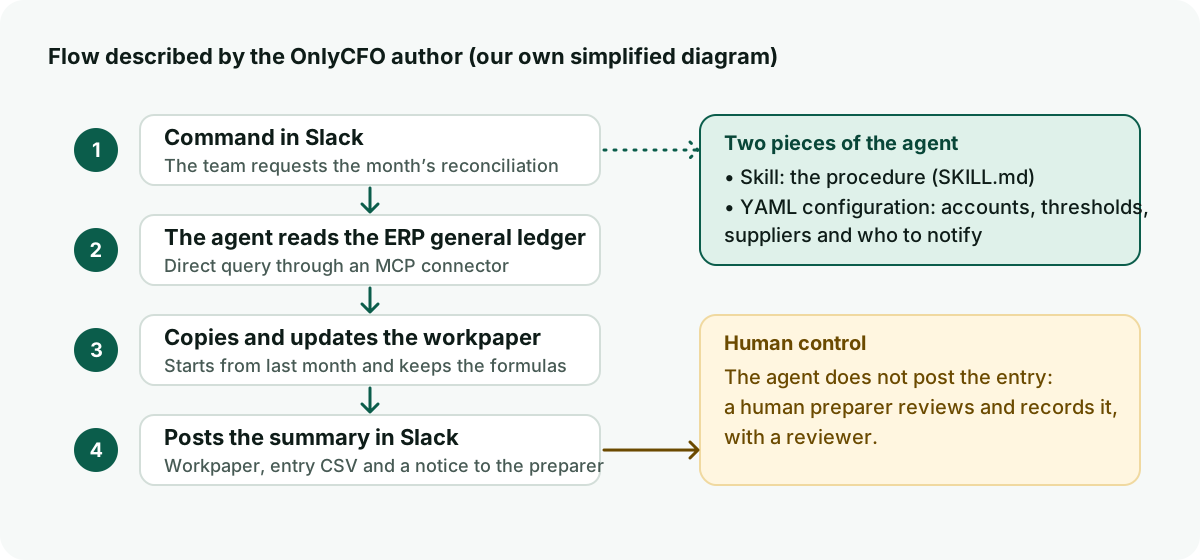
The diagram summarizes the steps the author describes: the command arrives from Slack, the agent queries the ERP general ledger through MCP, starts from the previous month’s workpaper and posts the result in Slack with a notice to the preparer. The two pieces (the skill and the configuration file) are the part their team keeps fine-tuning.
Important nuances
- This is one person’s experience at their company, told in a newsletter. The figures have not been audited.
- The article mentions a specific ERP only as an example when defining what MCP is; it does not claim it is theirs.
- That the agent does not post the entry is a control decision by the author, not a technical limitation stated in the text.
Sources
We wrote this entry in our own words from the sources above and checked that the links worked on October 17, 2026. Is anything incorrect? Tell us.